> For the complete documentation index, see [llms.txt](https://riduck.gitbook.io/riduck-guide/llms.txt). Markdown versions of documentation pages are available by appending `.md` to page URLs; this page is available as [Markdown](https://riduck.gitbook.io/riduck-guide/english/browse/lab.md).
# Riduck LAB
{% hint style="info" %}
In the Riduck LAB, you can try out upcoming features before they are officially released.
The LAB may transition to official service or be discontinued without prior notice, and it does not guarantee the smooth operation or accuracy of the features.
{% endhint %}
## Enter Bike Setup
For the most accurate simulation and optimal use of LAB features, ensure your personal body metrics and equipment details are entered correctly.
How to Enter Bike Setup:
1. Verify that your current weight matches the displayed weight.
2. Select the type and weight of your bike, as well as its setup status.
3. Choose the terrain type (condition) of the course you want to simulate.
4. Select the manufacturer and the power meter you are using.
5. Press the save setup button to store the entered information.
## Course Simulator (Segment Record Prediction)
You can pre-calculate the optimal way to ride a specific segment (course) using the rider’s body metrics, capabilities, and equipment details.
### Input Segment Information
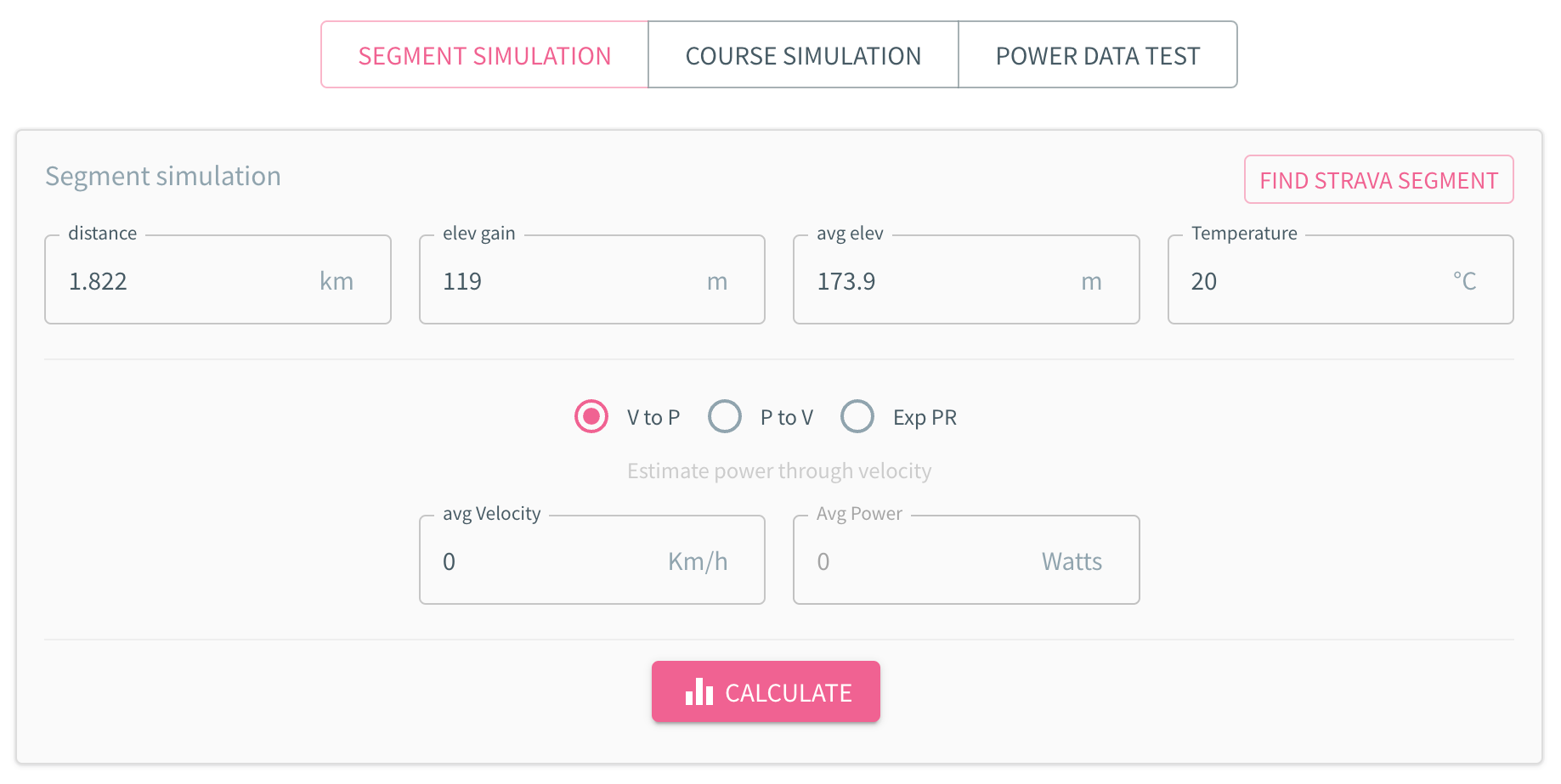
Enter the distance, elevation gain, average altitude, and temperature of the course you want to simulate.
{% hint style="info" %}
Press "Find Strava Segment" to automatically retrieve specific segment information such as distance, elevation gain, and average altitude registered on Strava (excluding temperature).
{% endhint %}
### Select Prediction Type
Choose one of the following three types for the simulation:
* Power Calculation: Determine the required wattage to sustain a specific average speed while riding the course.
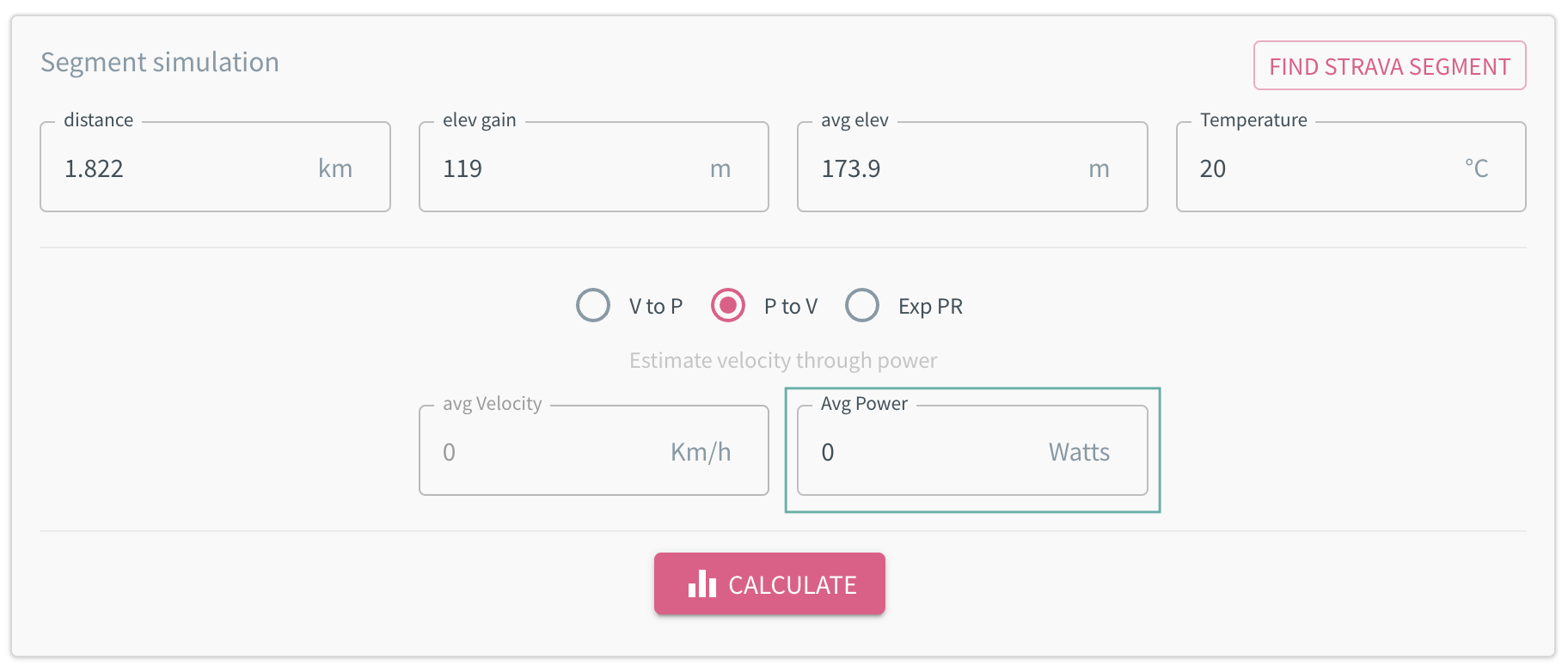
* Speed Calculation: Calculate the time required to ride the course at a specific power output.
* Estimated PR: Calculate your projected personal record based on your current FTP and the power curve derived from your riding data.
### Prediction Procedure
Depending on the selected type, proceed with the simulation as follows:
{% tabs %}
{% tab title="Power Calculation" %}
1. Enter the desired average speed for riding in the "Avg Velocity" field.
2. Click "Calculate".
{% endtab %}
{% tab title="Speed Calculation" %}
1. Enter the desired average power for riding in the "Avg Power" field.
2. Click "Calculate".
{% endtab %}
{% tab title="Estimated PR" %}
The estimation is based on the power curve derived from the accumulated data over time, so there is no need to input it.
* Click on the "Calculate" button directly below.
{% hint style="info" %}
For the first option (Estimate PR based on power curve), the result is based on the power curve derived from actual riding data, including peak power.
For the second option (Estimate PR based on expected power), the result is based on an estimation and adjustment of capabilities by RGT itself using peak power derived from actual riding.
{% endhint %}
{% endtab %}
{% endtabs %}